
Learn how to maintain an immersible ultrasonic transducer properly. Follow these inspection, cleaning, cable care and storage tips to extend service life.
Immersible ultrasonic transducers are widely used in industrial ultrasonic cleaning tanks to remove grease, rust, carbon deposits and other contaminants from metal parts. Proper daily maintenance helps extend service life, stabilize cleaning performance and reduce unnecessary replacement costs. Many premature failures are caused by improper operation, harsh chemical exposure and lack of regular inspection.
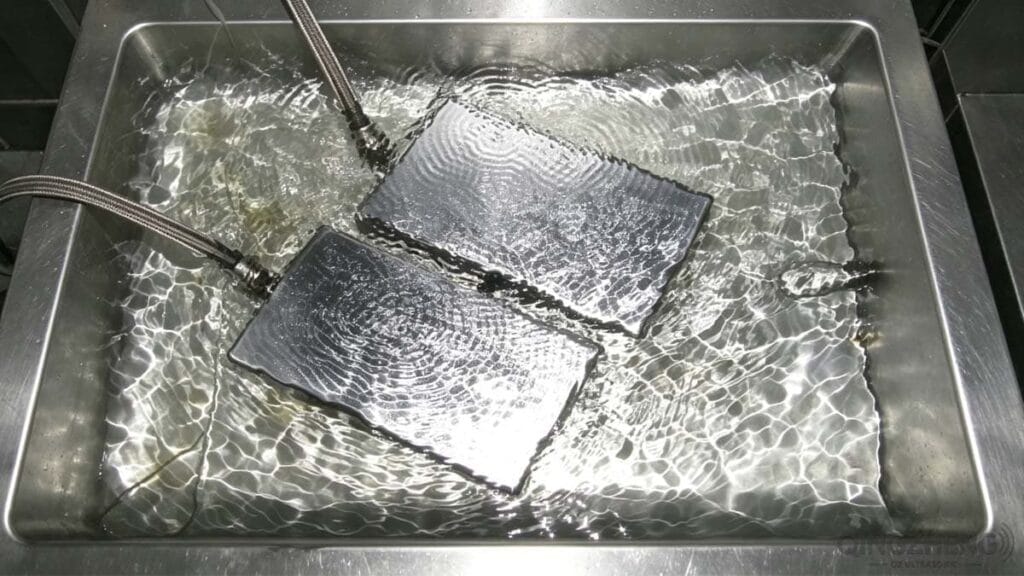
1. Maintain a Suitable Liquid Environment
The immersible transducer operates while directly immersed in cleaning liquid. Strongly corrosive chemicals should be avoided, as they may damage the metal housing and internal components over time.
Before starting the equipment, check the liquid temperature. Most ultrasonic transducers operate most reliably between 20°C and 60°C . Excessively high temperature can accelerate aging of piezoelectric ceramics and affect internal wiring.
It is also important to avoid running the ultrasonic generator when there is insufficient liquid in the tank. Dry running or overloading the transducer without proper immersion is one of the most common causes of burnout.
2. Clean and Inspect the Transducer Regularly
Schedule a visual inspection every 2 to 4 weeks. Before inspection, switch off the power and allow the system to cool down.
Check the transducer surface for scaling, sediment buildup or corrosion. Hard scale and heavy deposits can reduce ultrasonic cavitation efficiency and weaken cleaning performance. Clean the surface gently with a soft brush and neutral detergent. Do not use hard tools that may scratch or damage the transducer housing.
3. Check Cables and Electrical Connections
Regularly inspect the cable between the transducer and the ultrasonic generator. The cable and connectors should remain dry and free from water exposure.
If the cable insulation is damaged, cracked or wet, replace it immediately. Water ingress can cause short circuits and permanent damage to the transducer. Ensure all connections are secure, tight and free from loose contact.
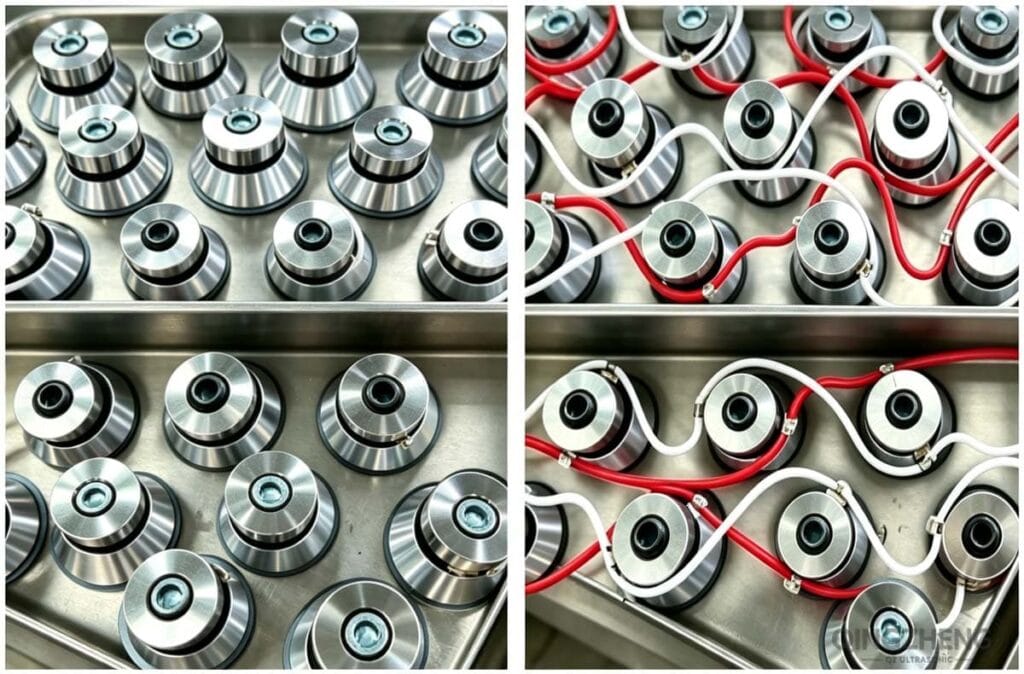
4. Store the Transducer Correctly When Not in Use
When the equipment will be stopped for a long period, drain the tank completely and clean the transducer. Allow it to dry fully before storage.
Store the transducer in a dry, ventilated area. Do not leave it submerged in dirty cleaning liquid for extended periods after completing work.
5. Stop Operation When Abnormal Issues Occur
If you notice abnormal noise, reduced cleaning power, overheating or continuous generator alarms, stop the machine immediately. Do not continue operating the equipment until the issue has been identified.
Possible causes include transducer damage, cable problems, poor electrical connection or incorrect generator settings. In such cases, inspect the transducer and related components, or contact your supplier for professional troubleshooting.
Conclusion
Good maintenance does not require complex procedures, but it does require consistency. By controlling the liquid environment, cleaning the transducer regularly, checking cables and connectors, and following correct storage practices, you can maximize the service life of your immersible ultrasonic transducer while maintaining stable ultrasonic cleaning performance.
If you need reliable immersible ultrasonic transducers for industrial cleaning applications, please contact us for specifications and quotations.
