
For ultrasonic cleaning system builders and integrators, sudden equipment downtime often traces back to one overlooked failure: transducer debonding. Many engineers spend hours tuning resonant frequency yet ignore bonding integrity, which can disable your entire ultrasonic generator and transducer assembly unexpectedly.
Transducer debonding means separation between the internal layers of your ultrasonic transducer. Once debonding occurs, vibration output drops sharply, creating overload on the ultrasonic generator. The result is weakened cavitation power, inconsistent cleaning quality, premature piezo ceramic aging, and unplanned production stops.
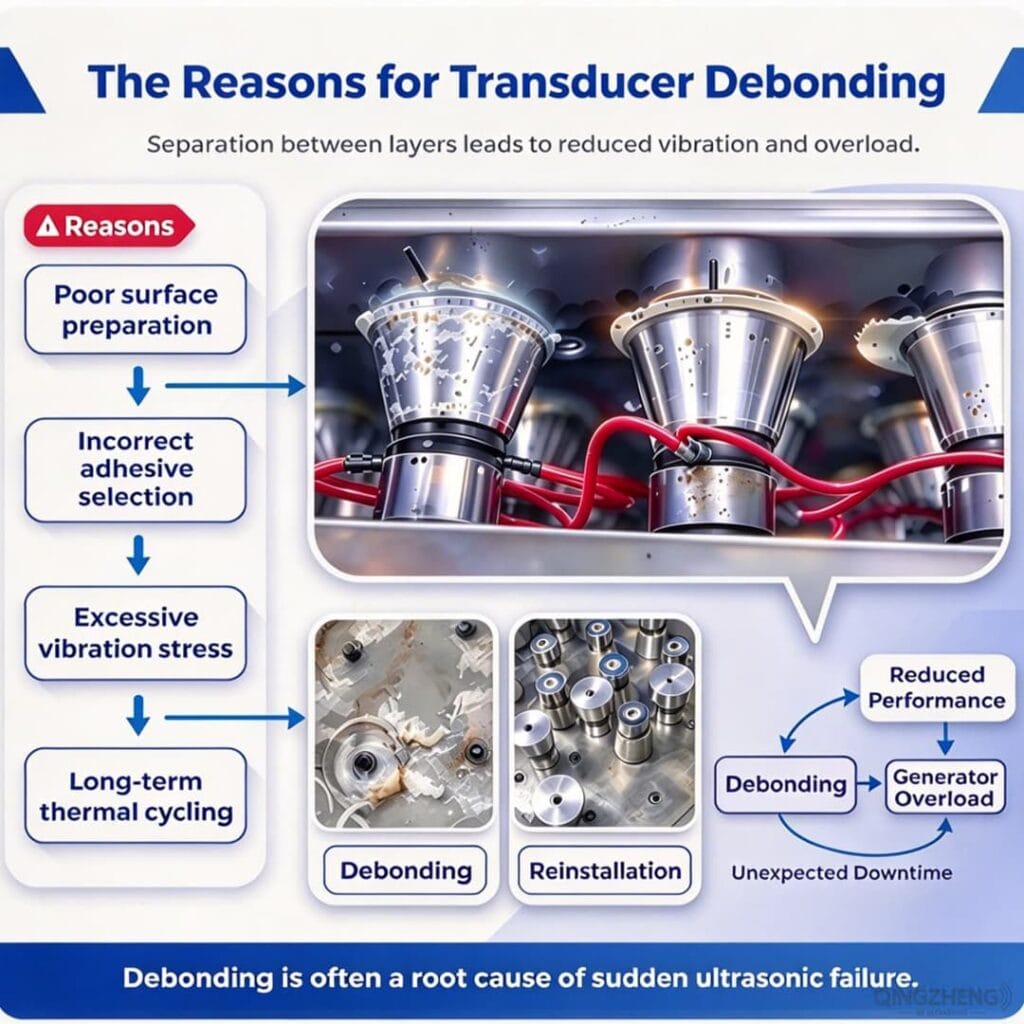
Four core factors lead to transducer debonding:
- Poor surface preparation: Grease, dust or oxidation left on bonding surfaces stops adhesive from forming a tight bond.
- Incorrect adhesive selection: Using glue that cannot withstand continuous vibration and thermal changes will crack over time.
- Excessive vibration stress: Improper frequency or impedance matching creates abnormal vibration stress, tearing the bonded joint.
- Long-term thermal cycling: Repeated heating and cooling during machine operation slowly fatigues the bonding layer.
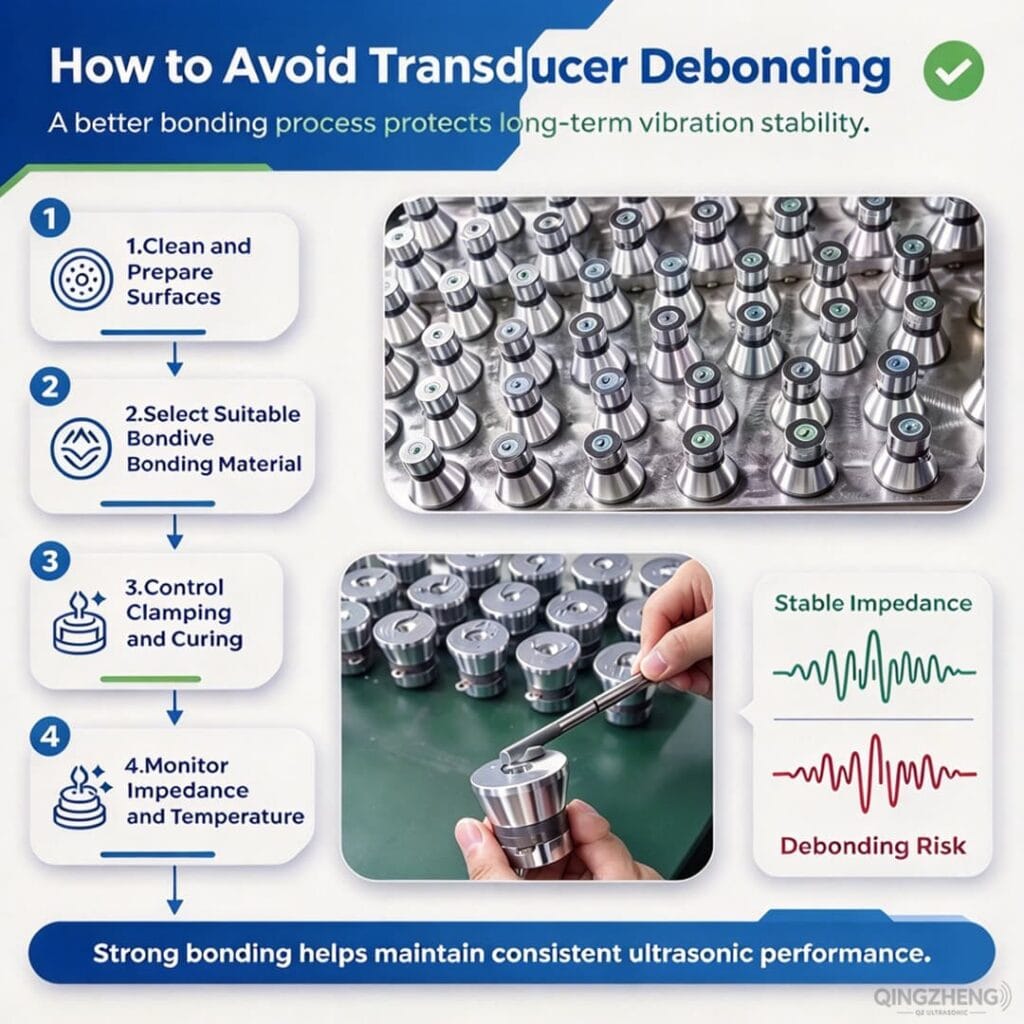
Thankfully, debonding is preventable with standardized bonding and inspection practices. Follow these four key steps to extend transducer service life and guarantee stable ultrasonic performance.
First, thoroughly clean and prepare all bonding surfaces to eliminate contaminants. Second, select high-performance bonding materials formulated for ultrasonic vibration environments. Third, strictly control clamping pressure and curing time during assembly to avoid incomplete bonding. Fourth, regularly monitor impedance and operating temperature during equipment testing and operation.
Impedance monitoring is especially critical here. Abnormal impedance readings are an early warning sign of rising debonding risk, long before visible damage or machine failure appears. Combined with proper frequency tuning, this check keeps your transducers running reliably.
For system integrators, stable ultrasonic performance does not only rely on resonant frequency calibration. Secure bonding, proper adhesive selection, and ongoing impedance monitoring together prevent debonding failures. Avoid costly emergency replacements and production downtime by addressing debonding risks at the assembly stage.
If you encounter unstable vibration, generator overload, or sudden drops in cleaning efficiency on your ultrasonic equipment, transducer debonding should be one of your first checks.
